Structured data helps your events travel further.
When event pages use structured data correctly, search engines and partner platforms can read the details with much less guesswork. That improves the odds that your event title, date, time, venue, image, and ticket information are understood and displayed properly. Google uses structured data to create Rich Snippets to customize search results and bring more awareness to the events on your calendar.
How structured data helps Google
Search engines do not always interpret event pages correctly from visible text alone. Structured data gives them labeled fields such as start date, end date, location, event status, offers, and organizer details. That extra context helps Google understand that a page is promoting a real event, not just mentioning one in passing.
When the markup follows the Schema.org Event specification and Google's event structured data guidance, Google has a much better chance of indexing the event accurately and using the right details in search features.
How it helps other calendars and websites
Many calendars, aggregators, and partner websites look for machine-readable event information when they evaluate pages to ingest, reference, or syndicate. Clear structured data makes it easier for those systems to recognize the event name, venue, schedule, and ticket URL without relying on fragile scraping rules.
In practice, that means fewer mismatched dates, fewer missing venues, and a better chance that your event appears consistently across sites that surface local happenings. Standardized markup makes your event page more portable across the wider event ecosystem.
What ZoopCalendar is doing
ZoopCalendar event pages are built around event-specific structured data so each listing has a stronger semantic foundation. That helps search engines understand what the page represents, and it also makes the content easier for downstream calendar tools and websites to consume.
Here is a simple demo of the kind of JSON-LD event markup search engines can read:
{
  "@context": "https://schema.org",
  "@type": "Event",
  "name": "Downtown Summer Jazz Night",
  "startDate": "2024-08-14T19:30:00-07:00",
  "endDate": "2024-08-14T22:00:00-07:00",
  "eventStatus": "https://schema.org/EventScheduled",
  "eventAttendanceMode": "https://schema.org/OfflineEventAttendanceMode",
  "description": "A demo community jazz concert in the plaza with local performers, food vendors, and outdoor seating.",
  "image": [
    "https://zoopcalendar.com/images/demo-jazz-night.jpg"
  ],
  "location": {
    "@type": "Place",
    "name": "Market Square Plaza",
    "address": {
      "@type": "PostalAddress",
      "streetAddress": "123 Main Street",
      "addressLocality": "Oakland",
      "addressRegion": "CA",
      "postalCode": "94612",
      "addressCountry": "US"
    }
  },
  "organizer": {
    "@type": "Organization",
    "name": "Demo Arts Collective",
    "url": "https://zoopcalendar.com"
  },
  "offers": {
    "@type": "Offer",
    "url": "https://zoopcalendar.com/demo-event",
    "price": "15",
    "priceCurrency": "USD",
    "availability": "https://schema.org/InStock",
    "validFrom": "2024-07-01T09:00:00-07:00"
  }
}
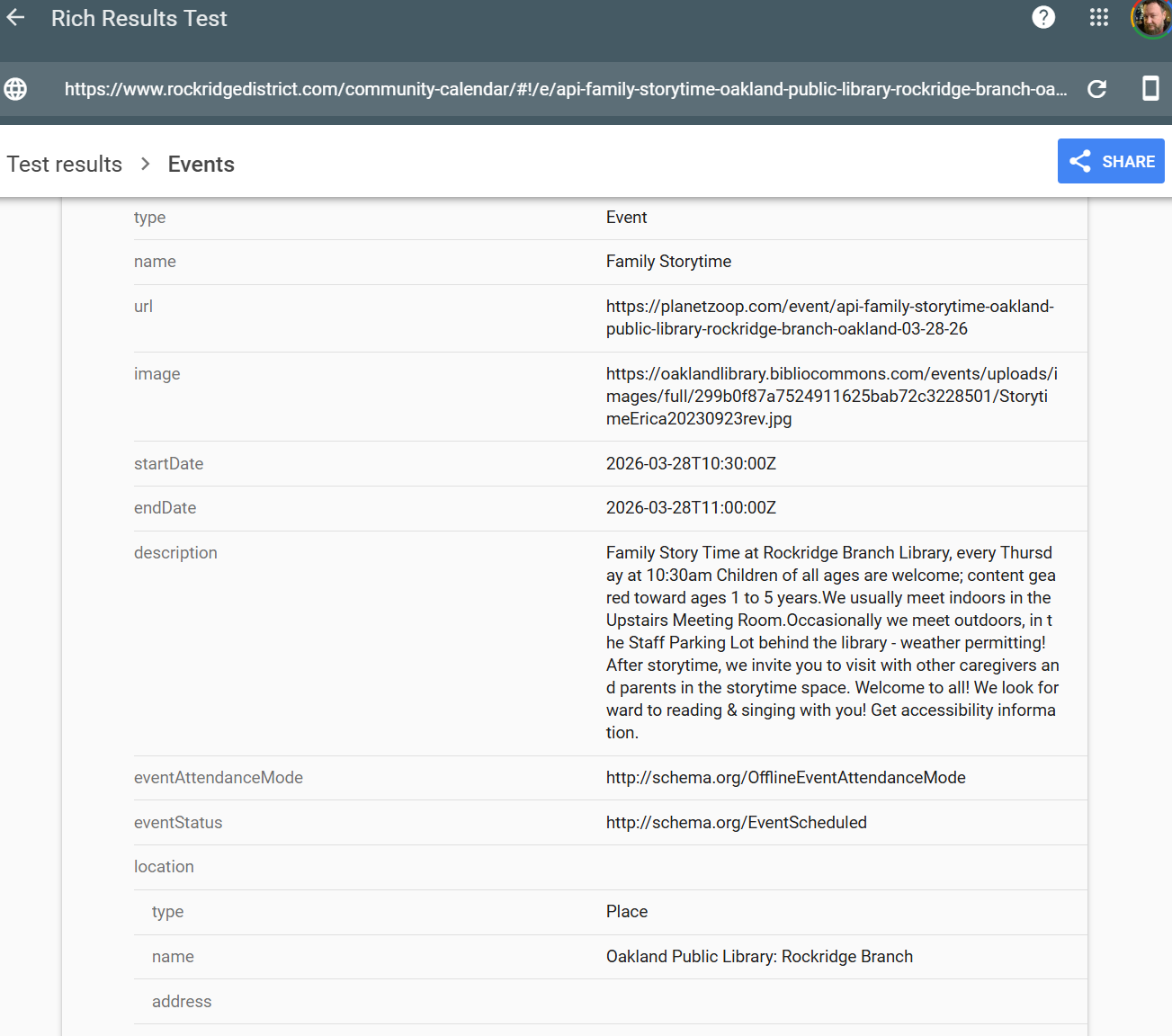
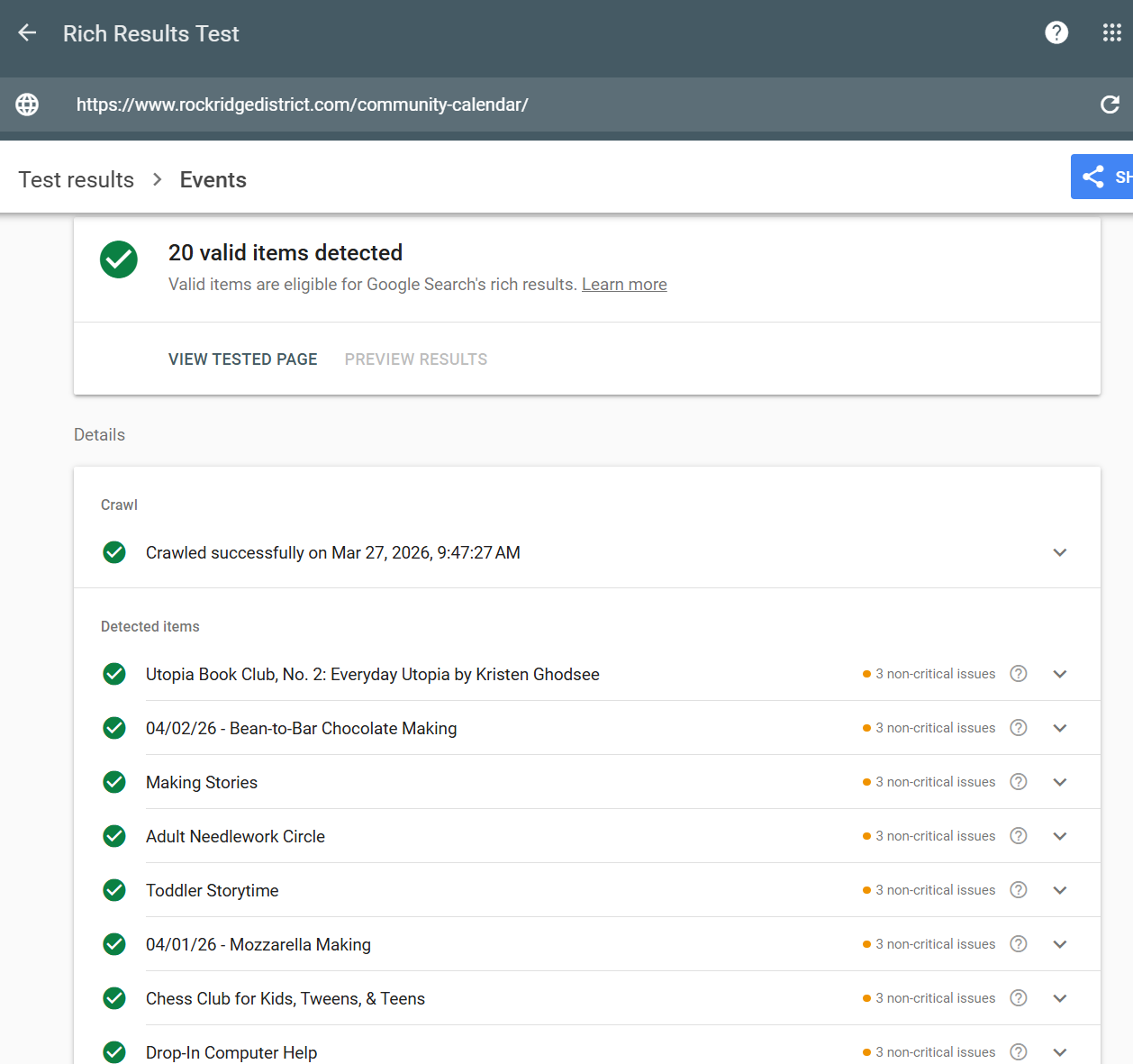
If you want to inspect a live example, Google’s Rich Results Test is a helpful way to see how a crawler interprets event markup: view the example result here.
Useful references
Start with the official event schema and Google guidance if you want to understand the vocabulary and the search requirements in more detail.